Attic insulation plays an important role in keeping a home comfortable and controlling energy costs. When insulation is too thin, damaged, or poorly installed, heat can escape during winter and enter the living space during summer. As a result, heating and cooling systems may need to work harder to maintain a comfortable indoor temperature.
Upgrading attic insulation can help reduce heat transfer, improve indoor comfort, and lower energy consumption. However, the best results depend on more than adding insulation. Air leaks, moisture problems, ventilation, and the condition of existing materials also affect how well an attic performs.
Homeowners who want to improve home energy efficiency should begin by understanding their attic’s current condition. From there, they can choose practical upgrades that address the biggest sources of energy loss without spending money on unnecessary improvements.
Why Attic Insulation Matters
Heat naturally moves between warmer and cooler areas. During cold weather, indoor heat can rise toward the attic and escape through an inadequately insulated ceiling. During hot weather, a warm roof can transfer heat into the attic, increasing the temperature of rooms below.
Effective insulation slows this movement of heat. It helps maintain more consistent indoor temperatures and reduces the demand on heating and cooling equipment.
Several benefits can come from a well-insulated attic:
- Lower energy consumption: Heating and cooling systems may run less frequently when the home retains its desired temperature more effectively.
- Improved comfort: Better insulation can reduce temperature differences between rooms and floors.
- Reduced strain on HVAC equipment: Lower heating and cooling demand may help limit unnecessary system operation.
- Better long-term home performance: Addressing insulation gaps and air leaks can make the building envelope more effective.
The actual savings depend on the home’s existing insulation, local climate, energy prices, and the efficiency of its heating and cooling systems. Insulation is not a guaranteed source of a specific percentage of savings, but it can be an important part of a broader energy-efficiency plan.
Signs That an Attic Needs Better Insulation
Before purchasing insulation, homeowners should look for signs that the existing setup is not performing well.
Uneven Indoor Temperatures
Bedrooms directly below the attic may become unusually hot in summer or cold in winter. If the heating and cooling system struggles to keep these rooms comfortable, inadequate insulation or air leakage may be contributing to the problem.
However, duct leaks, poor airflow, and window performance can also affect room temperatures. An attic inspection can help identify the actual cause.
Increasing Heating and Cooling Bills
A sudden or gradual increase in energy costs may indicate that a home is losing heat or gaining unwanted warmth. Changes in energy rates, weather, equipment condition, and household usage can also influence bills, so insulation should not be assumed to be the only cause.
Comparing energy use across similar seasons can help homeowners determine whether consumption has increased.
Visible Gaps or Damaged Insulation
Insulation that appears compressed, displaced, wet, or uneven may not provide its intended performance. Bare patches around attic edges, ceiling fixtures, and access openings can also allow unwanted heat transfer.
Wet or moldy insulation requires particular attention. The moisture source should be identified and corrected before replacement materials are installed.
Drafts and Air Leaks
Air can move through gaps around wiring, plumbing pipes, attic hatches, recessed lights, and ceiling joints. These openings can allow conditioned air to escape and outdoor air to enter.
Insulation slows heat transfer, but it does not automatically seal every opening. Air sealing is therefore an essential part of many attic improvement projects.
Choosing the Right Attic Insulation Material
The most suitable insulation depends on the attic’s layout, the existing material, the available installation space, and the project’s budget. Homeowners should compare thermal performance, installation requirements, moisture considerations, and safety before making a decision.
Fiberglass Insulation
Fiberglass is available in batts, rolls, and loose-fill forms. It is commonly used because it is widely available and can suit many attic designs.
Batts and rolls work well in accessible spaces with regular joist spacing. Loose-fill fiberglass can be useful for covering larger attic floors and filling around some irregular areas.
For effective performance, fiberglass must be installed at the appropriate thickness without excessive compression. Gaps and poorly fitted sections can reduce its effectiveness.
Cellulose Insulation
Cellulose is generally made from processed recycled paper products treated with fire-retardant chemicals. Loose-fill cellulose can cover attic floors and fit around many obstacles, making it useful for certain existing homes.
Its performance depends on proper installation, adequate depth, and appropriate moisture control. Homeowners should also ensure that the attic structure and ventilation arrangements are suitable for the selected material.
Spray Foam Insulation
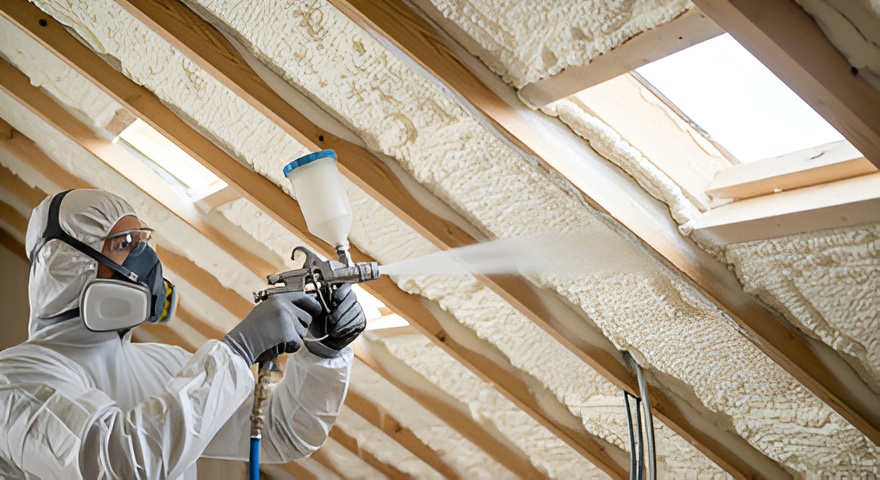
Spray foam expands after application and can help seal air leakage while providing insulation. Depending on the product, it may be applied to selected roof surfaces, framing areas, or other parts of the building envelope.
However, spray foam usually costs more than many traditional insulation options. Its installation can also affect moisture movement and attic ventilation, so it should be selected with care.
A qualified professional can help determine whether open-cell or closed-cell foam is appropriate for the home’s construction and climate.
Comparing the Options
Fiberglass and cellulose may be suitable for many attic-floor upgrades, while spray foam can offer advantages in certain complex or air-leakage-prone areas. No single material is best for every property.
Homeowners should compare the material’s R-value, which measures resistance to heat flow, as well as its installed cost and suitability for the space. Local building requirements and recommended insulation levels should guide the final decision.
Practical Attic Insulation Upgrades That Make a Difference
A successful project should address the attic as a complete system rather than treating insulation thickness as the only priority.
Add Insulation Where Existing Coverage Is Insufficient
One of the most direct improvements is adding insulation to areas that fall below the recommended level. If the existing material is dry, clean, and in good condition, it may be possible to add compatible insulation over it.
The required depth depends on the insulation material and its R-value. Homeowners should avoid relying on a universal thickness because recommended levels vary by climate and building requirements.
Before adding material, the attic should be checked for roof leaks, dampness, pest damage, and unsafe wiring conditions.
Seal Air Leaks Before Installing More Insulation
Air sealing is often one of the most valuable steps in an attic upgrade. Small openings around pipes, cables, ceiling joints, and attic access points can allow substantial air movement.
Suitable sealants or other approved materials can close many gaps. Larger openings may require rigid blocking or specialist work.
Heat-producing fixtures, chimneys, flues, and other components need appropriate clearance and fire-safe sealing methods. Insulation or ordinary sealant should never be placed against equipment where it could create a fire or overheating hazard.
Where combustion appliances are present, air-sealing work should also account for safe combustion air and the risk of exhaust gases entering the home.
Improve the Attic Hatch or Access Door
An attic hatch can become a weak point in the home’s insulation layer. If the opening is uninsulated or poorly sealed, warm air can escape through it during winter and hot air can enter the living space during summer.
Adding suitable insulation to the hatch and installing weatherstripping around its edges can improve its performance. The hatch should close securely without leaving visible gaps.
Protect Against Moisture
Moisture can reduce insulation performance and contribute to wood damage or mold growth. Before starting an upgrade, homeowners should check for roof leaks, plumbing problems, damp areas, and signs of condensation.
Bathroom and kitchen exhaust fans should discharge outdoors through appropriate ducts rather than into the attic. Indoor humidity should also be managed to reduce condensation risk.
The correct ventilation and vapor-control approach depends on the climate and roof design. A professional assessment can help prevent an upgrade from trapping moisture in the wrong place.
Check Ventilation and Roof Conditions
Many traditional vented attics rely on a designed path for outdoor air to move through the space. Adding insulation should not block intended soffit or roof vents.
Baffles can help preserve airflow at the eaves when required by the attic design. However, ventilation strategies differ, especially in homes with unvented roof assemblies.
Homeowners should not add vents or change the roof assembly without understanding how the existing system manages heat and moisture.
How to Plan an Attic Insulation Upgrade on a Budget
A limited budget does not mean every improvement must happen at once. A sensible plan starts with the problems most likely to affect energy performance, comfort, or building condition.
Start With an Inspection
Examine the insulation’s condition, coverage, and approximate depth. Look for moisture, damaged roofing, air leakage, and blocked ventilation paths.
For older homes, a professional energy assessment may reveal other issues, such as leaky ducts or poorly sealed windows. These findings help homeowners decide which improvements deserve attention first.
Prioritize Air Sealing and Insulation Gaps
If the attic has major air leaks and visibly insufficient insulation, addressing these issues may be more useful than purchasing expensive insulation materials immediately.
The best sequence depends on the building. Air sealing, moisture repairs, and insulation installation should be coordinated so that one improvement does not create problems for another.
Compare Costs With Expected Benefits
Homeowners should request estimates that identify the insulation material, proposed R-value, preparation work, air sealing, and cleanup. Comparing only the price per bag or roll can be misleading because installation quality and the amount of preparation required also affect the final result.
Energy-efficient home improvements should be evaluated over their useful life, not just their initial price. Actual payback varies according to local energy costs, climate, existing conditions, and the amount of energy saved.
Check Available Incentives
Some areas offer rebates, tax incentives, or assistance programs for insulation and other energy-saving improvements. Eligibility rules can change and may depend on household income, property type, approved contractors, or the date of installation.
Homeowners should check official government and utility sources before committing to a project. They should also confirm whether an assessment or pre-approval is required.
Should Homeowners Upgrade Windows or HVAC Systems Too?
Attic insulation often works best as part of a coordinated approach to energy efficiency. However, other improvements should be selected according to the home’s actual needs.
Windows and Exterior Doors
Older or poorly sealed windows can contribute to drafts and unwanted heat transfer. Weatherstripping, caulking, suitable window coverings, or targeted window improvements may help address these problems.
Replacing every window is not always the most cost-effective first step. The condition of the existing windows, the local climate, and the cost of the proposed replacement should all be considered.
Heating and Cooling Equipment
An inefficient or incorrectly sized HVAC system can waste energy even when the attic is well insulated. Regular maintenance, clean filters, sealed ducts, and properly configured controls can improve performance.
Major equipment replacement may be appropriate when the existing system is failing or inefficient, but the home’s insulation and air leakage should be considered before choosing new equipment. Reducing the heating and cooling load may affect the appropriate system size.
Smart Thermostats and Lighting
A programmable or smart thermostat can help manage heating and cooling schedules. Its benefits depend on household routines, equipment compatibility, and correct setup.
Switching frequently used lights to LEDs is another relatively straightforward improvement. These upgrades can complement attic insulation, although they address different sources of energy use.
How Climate Affects Attic Insulation
Climate influences how heat moves through a home and which improvements deserve priority.
In cold regions, homeowners often focus on retaining indoor heat, sealing air leaks, and reducing drafts. The attic insulation level and control of warm, moist indoor air are especially important.
In hot climates, insulation can slow heat entering the home through the roof and attic. Air leakage, roof characteristics, shading, and the efficiency of cooling equipment can also affect indoor comfort.
Homes in mixed climates need a balanced approach that considers both heating and cooling demands. In humid areas, moisture management becomes particularly important because poorly designed assemblies can trap condensation.
Rather than choosing insulation based on climate alone, homeowners should consider local building guidance, the roof design, and the condition of the existing attic.
Common Attic Insulation Mistakes to Avoid
Even a high-quality insulation material can underperform when installation problems remain unresolved.
Common mistakes include:
- Covering moisture problems: Wet materials and roof leaks should be addressed before insulation is added.
- Blocking ventilation paths: Insulation should not obstruct vents that are part of a designed attic ventilation system.
- Ignoring air leaks: Insulation alone may not stop air movement through gaps in the ceiling.
- Compressing insulation: Some materials lose performance when installed under excessive compression.
- Using unsuitable sealing materials: Areas around chimneys, flues, and heat-producing equipment require appropriate clearances and fire-safe methods.
- Choosing material based only on price: Installation requirements, durability, and suitability also matter.
- Ignoring electrical or structural concerns: Damaged wiring, unsafe access, pests, and structural problems should be assessed before work begins.
Homeowners should use suitable protective equipment when inspecting accessible attics and avoid disturbing suspected asbestos-containing materials or other hazardous substances. Difficult, contaminated, or poorly accessible spaces are better assessed by qualified professionals.
A Simple Plan for Better Attic Energy Performance
A practical upgrade can be organized into a few manageable stages.
- Inspect the attic. Identify insulation gaps, moisture problems, air leaks, and ventilation concerns.
- Correct underlying issues. Repair roof leaks, address dampness, and resolve relevant safety problems.
- Seal suitable air leaks. Use appropriate materials and observe fire-safety requirements.
- Install or improve insulation. Select a suitable material and R-value based on local recommendations.
- Verify the finished work. Check coverage, access openings, and ventilation paths where applicable.
- Monitor energy use and comfort. Compare bills and indoor temperatures over similar weather periods to understand whether performance has improved.
For complex roofs, inaccessible spaces, older buildings, or homes with persistent moisture problems, a qualified insulation contractor or building-energy professional can help establish the right approach.
Conclusion
Attic insulation upgrades can make a home more comfortable and reduce unnecessary heating and cooling demand. The most effective results usually come from combining suitable insulation with air sealing, moisture control, and attention to the attic’s ventilation design.
Homeowners do not always need the most expensive material or a complete renovation. A careful inspection, a clear understanding of existing problems, and a prioritized improvement plan can help direct the budget toward the work that matters most.
By treating attic insulation as part of the home’s overall energy performance, homeowners can make more informed decisions and build a practical path toward lower energy use and more consistent indoor comfort.
FAQs
1. What is the best insulation for an attic?
Fiberglass, cellulose, and spray foam are common options. The best choice depends on the home’s climate, budget, and attic design.
2. How do I know if my attic needs more insulation?
Uneven room temperatures, high energy bills, and visible insulation gaps may indicate a need for an upgrade.
3. Can I add new insulation over old insulation?
Yes, if the existing insulation is dry, clean, and in good condition. Moisture problems should be fixed first.
4. Does attic insulation reduce energy bills?
Yes, it can reduce heating and cooling costs by limiting unwanted heat transfer, although savings vary by home.
5. Can I install attic insulation myself?
Yes, some projects are suitable for DIY installation, but complex spaces and safety concerns may require a professional.
Read Also: The Ultimate Guide to Wayfair Furniture